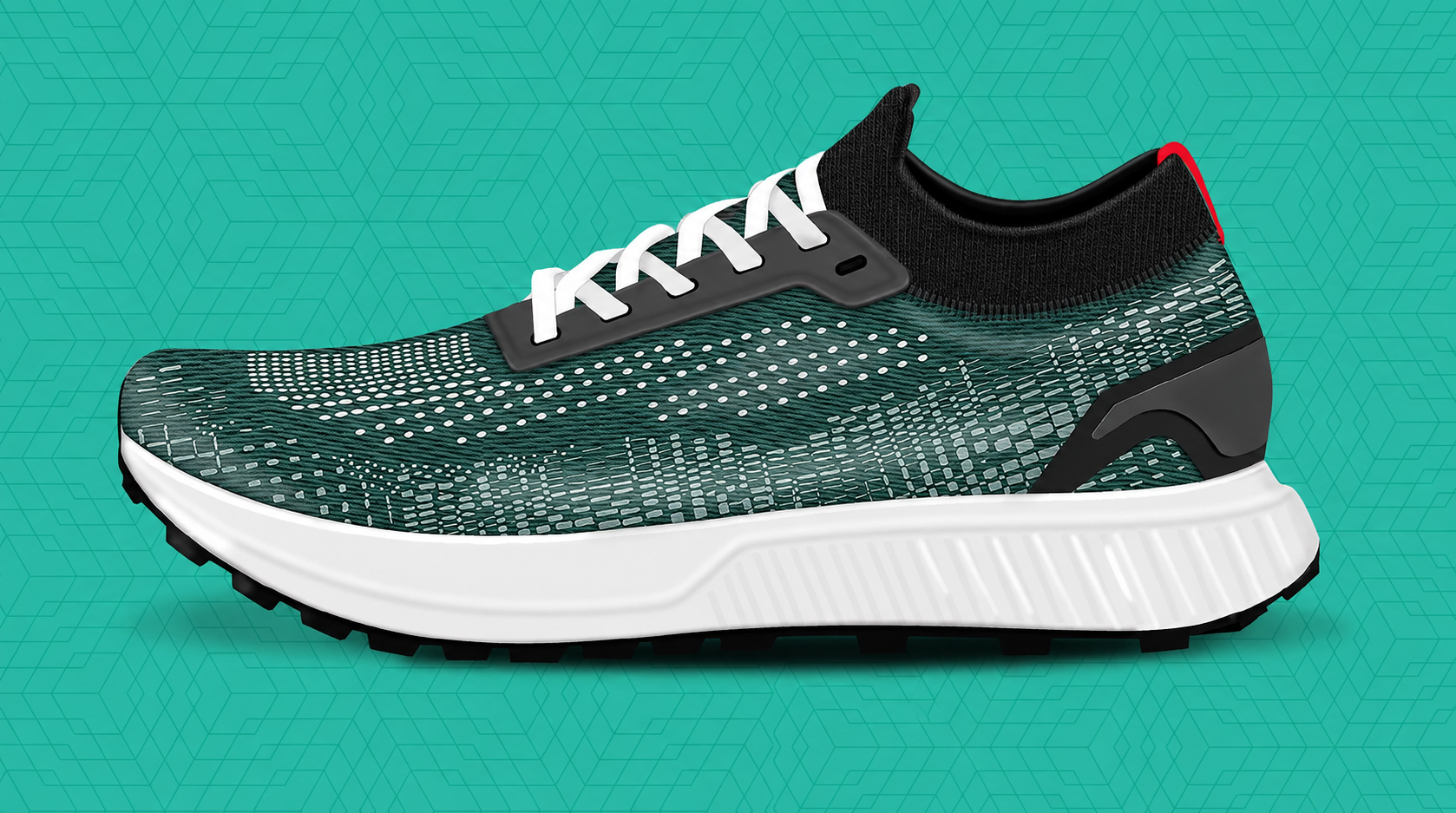
Can an everyday shoe notice pressure shifts before they become a fall?
Retro Walk began as a footwear project, but I treated the shoe less as a product and more as a sensing surface.
The question was simple: if imbalance starts as small changes in posture, pressure, and walking confidence, can a wearable catch those changes early enough to support correction?
Not a medical device. A research prototype for noticing the body before the body fails.
The problem
-
Falls in older adults are often treated as sudden events, but the warning signs can build slowly through gait, posture, and pressure imbalance.
-
People may not notice when they begin loading one side of the foot more than the other.
-
Clinical gait tools are useful, but they are not always available inside everyday routines.
-
Most technical footwear looks technical first and wearable second. I wanted to challenge that.
The research direction
I focused on ageing mobility across elders and active adults, with caregivers, occupational therapists, and family members as secondary stakeholders.
05
Safer walking practice
The project was also personal. I had seen elderly people around me struggle with standing for long periods, body ache, reduced mobility, and the difficulty of finding products that felt useful without looking like medical equipment.
What I built
The working prototype explored how pressure could be sensed through the insole, then translated into a readable feedback loop.
BUILT
Load-sensing insole
An insole direction with embedded load-sensing points to capture pressure shifts during standing and walking.
BUILT
Arduino circuit
A low-fidelity circuit prototype to test whether pressure readings could be captured from the footwear base.
PROPOSED
BLE + app layer
A mobile interface that receives walking data, shows pressure patterns, and gives corrective guidance.
FUTURE
ML comparison model
A later layer that compares user pressure distribution with healthier medial-lateral loading patterns.
The prototype collected a direction. The intelligence layer was the next stage.
System logic
The intended interaction was short and repeatable: walk, read, correct, repeat.
-
The user stands and walks for a short trial, around 50 metres, to create an initial pressure profile.
-
The insole reads how pressure is distributed across the foot, especially medial and lateral loading.
-
The app compares this pattern with a healthier pressure-distribution model with compared demographic data set.
-
During practice, the user receives simple audio, haptic, and visual cues if pressure shifts too strongly to one side.
-
Progress is shown through charts, tutorials, and corrective walking exercises.
The interface idea
I did not want the app to scare the user with diagnosis. The interface had to behave more like a coach than a warning label.
NOTICE
Medial-lateral shift
PRACTISE
Tutorial movement
The technical frame
The project sits in the same technical family as smart insoles used for gait and plantar-pressure monitoring.
-
Pressure distribution became the main signal, not step count alone.
-
Medial-lateral loading helped frame whether the body was overloading one side of the foot.
-
Centre of pressure shift became a useful future metric for identifying unstable walking patterns.
-
Feedback timing mattered because real-time correction can become annoying if it is too frequent.
What I learned
-
A healthcare wearable cannot only be technically correct. It also has to feel socially wearable.
-
The moment sensors enter footwear, the form can quickly start looking like an experiment. I wanted the technology to disappear into a normal shoe.
-
Early diagnosis is not only a data problem. It is also a trust, comfort, and habit problem.
-
Feedback for elders has to be calm. Too much warning can reduce confidence instead of supporting movement.
Limits
Retro Walk was a concept prototype built with the R&D team at Benetton India. It was not clinically validated, and the user feedback was on the idea and direction, not on long-term use of the working product.
The ML model and fuller app screens are the next stage: longer walking trials, a larger pressure dataset, therapist input, and a more careful comparison model.
The value of the project was not that the shoe solved fall prevention. It showed how a familiar object could become an early conversation with the body.
Where it points
Retro Walk points toward assistive footwear that does not announce itself as assistive. A shoe that can support gait awareness, home-based mobility practice, and early pressure-pattern screening without turning the user into a patient first.